
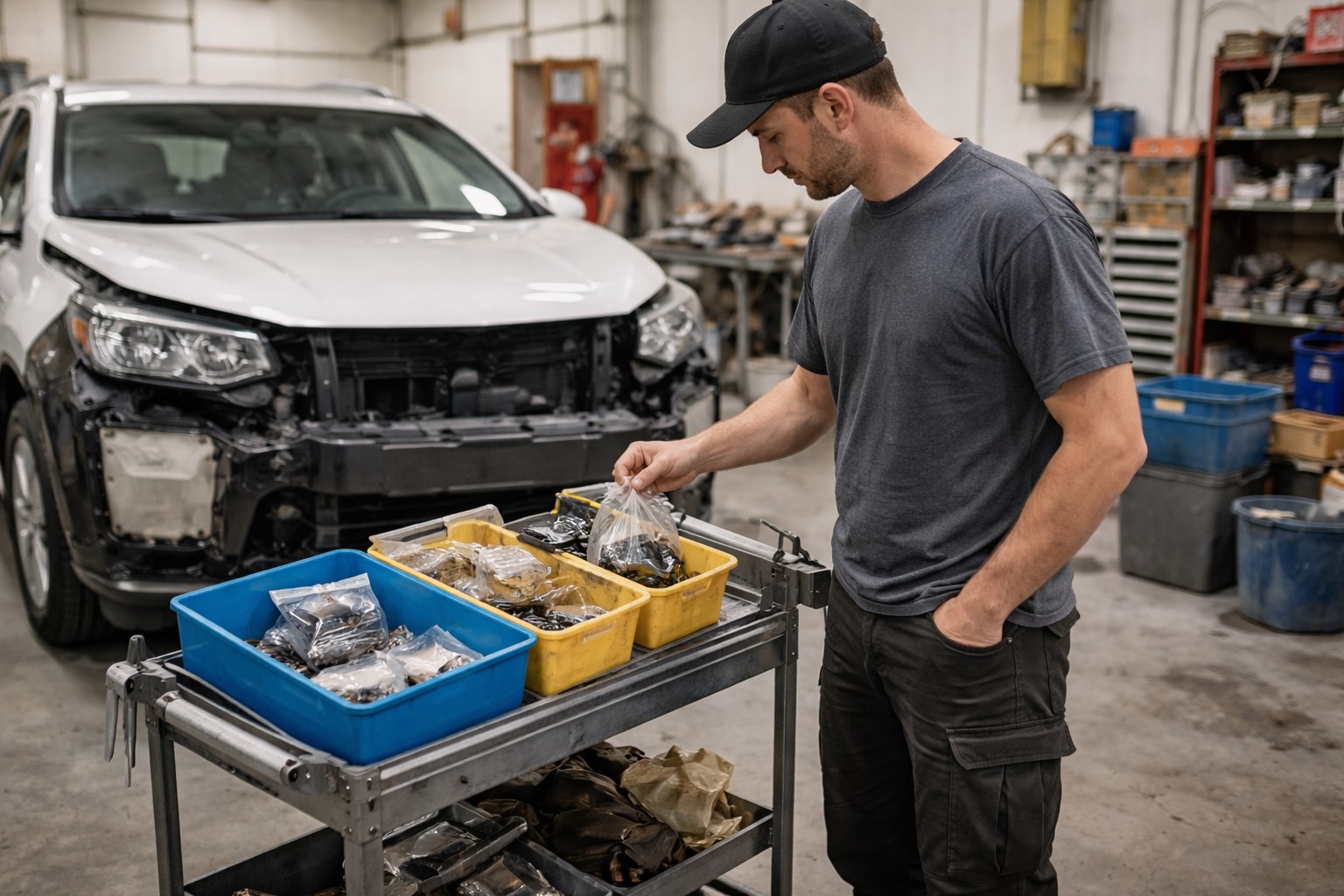
The front bumper cover is off, the headlamp is out, and teardown is done. Then reassembly starts, two lower retainers are missing, one bracket screw is mixed into another pile, and the technician stops while someone digs through the parts cart. That is how a clean repair order turns into a delivery risk. The operational problem is not vendor delay. It is hardware control inside the collision repair shop.
Most collision repair facilities treat clips, screws, shields, and brackets like small leftovers from a bigger job. They are not. They are what decide whether reassembly moves cleanly or stalls over a five-minute search that becomes forty-five. In a small independent collision repair shop, the stall spreads fast because the same people who should be moving work are now hunting, asking, and rechecking.
A better rule is simple: every teardown gets two containers. One holds reusable hardware, bagged and labeled by area. The other holds damaged or one-time-use items that must be replaced before the vehicle is called buildable. Once that rule becomes standard, the parts cart starts telling the truth.
Before a vehicle leaves teardown, confirm three things:
-
Reusable hardware is bagged and labeled by panel or operation
-
One-time-use clips, seals, and fasteners are flagged for order
-
Unusual bracket or sensor mounting points are photographed before disassembly
This is not about being neat. It is about protecting technician rhythm, keeping the production board honest, and avoiding the kind of delay that makes a customer hear “later today” when the vehicle was never truly ready. Collision repair shop owners do not need a bigger system here. They need a tighter habit.
The expensive part is never the clip itself. The expensive part is the interruption, the broken sequence, and the lost confidence that follows it. When a collision repair facility controls hardware at teardown, reassembly stops feeling like guesswork and starts feeling scheduled.
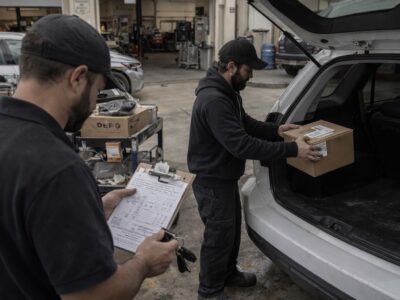
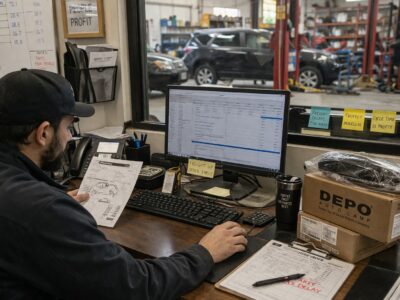

What gets lost more often in your collision repair facility: the hardware, or the time spent finding it again?