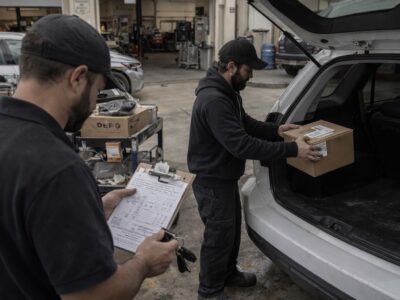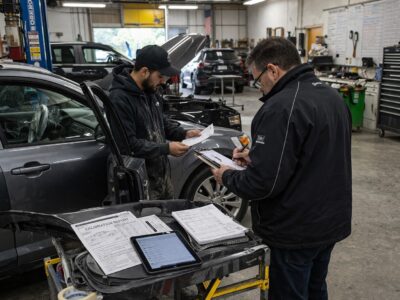
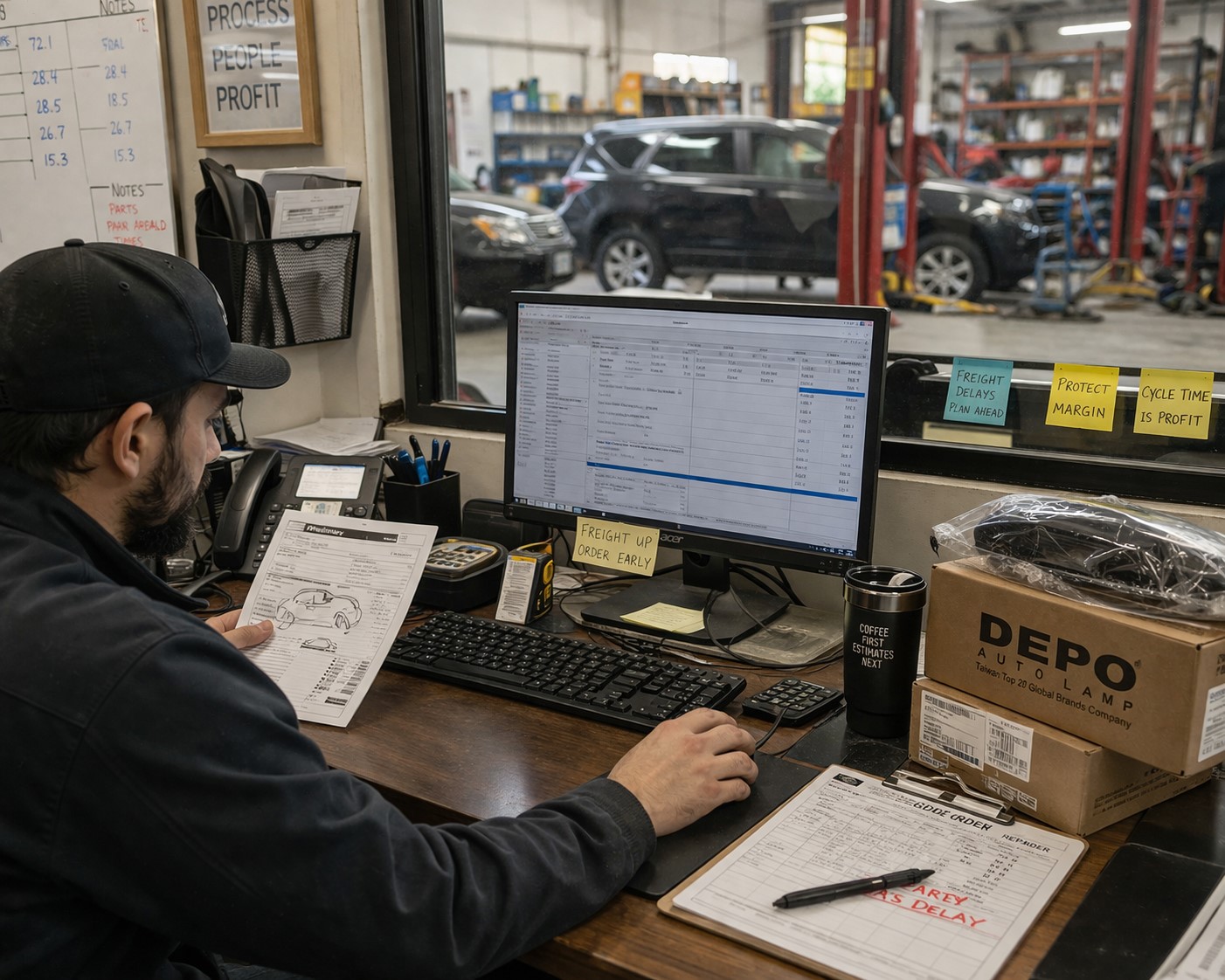
A front-bumper job gets blueprinted at 9:30, the estimator waits until after lunch to lock the parts order, the vendor updates freight timing, and the promised delivery date softens before teardown is even finished. What started as oil-price volatility became a collision repair shop problem through shipping cost, parts timing, and a weaker repair plan. The operational concept is simple: when fuel and freight get unstable, the shop has to shorten the time between a clean blueprint and a committed parts order. Waiting gets more expensive faster than most collision repair shop owners expect.
That matters now because global oil markets are still volatile around the Strait of Hormuz, and the Energy Information Administration says shipping through that waterway remains limited. In a small independent collision repair shop, that pressure does not arrive as a headline. It shows up as changed freight timing, softer arrival windows, and more hesitation around which parts to commit first. Once that hesitation reaches the production board, the repair order starts carrying a hidden cost instead of visible damage.
Most collision repair shop owners do not lose margin on one dramatic freight bill. They lose it through small delays that stack together. A later order shortens parts staging time, increases rush decisions, raises supplement risk, and makes the original delivery promise less reliable. The job still looks active, but gross profit is starting to shrink in places the front office does not always notice right away.
The better move is not panic ordering. It is making sure clean blueprints get reviewed, approved, and committed faster on freight-sensitive jobs. A collision repair shop does not need to predict oil prices to protect gross profit. It needs a rule that unstable shipping conditions change ordering speed, parts staging discipline, and when a delay gets escalated.