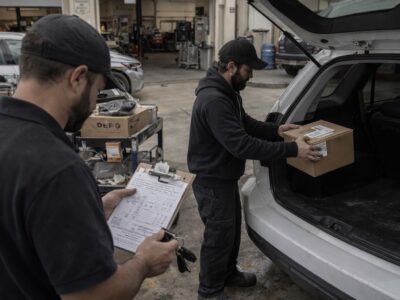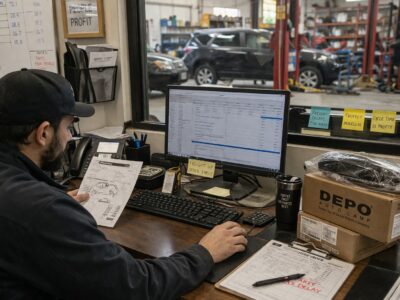
A repair order is approved, the next operation is ready, and the technician goes to pull the vehicle. Then the slowdown starts. The keys are not at the front. They are not in the estimator’s office. They are not in the car. Someone thinks the vehicle is behind the building, but it was moved after the cleanup. Ten minutes later, three people have touched the problem, and no repair work has started.
That kind of delay gets treated like normal shop noise. It should not. In a collision repair shop, vehicle hunts and key hunts are production losses. They break the sequence, interrupt handoffs, and make the board look more truthful than the floor actually is.
The problem is usually not effort. It is the lack of one fixed rule. Too many shops let vehicle location live in memory and let key custody float with whoever touched the job last. That works right up until volume rises, one employee is out, or the lot gets tight.
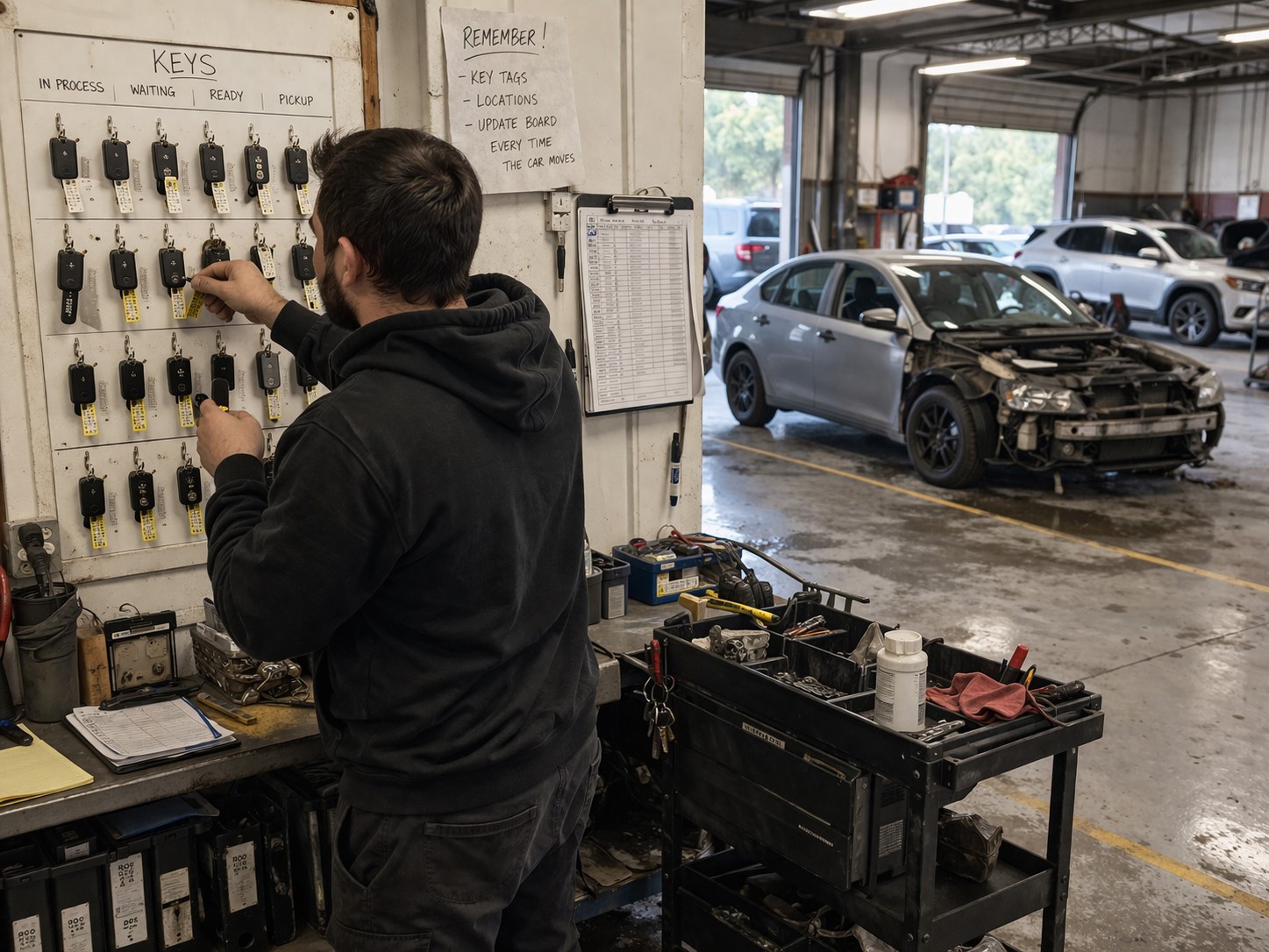
A better rule is simple: every vehicle gets one current location and one current key home, both updated every time the vehicle moves. Not “usually.” Every time.
That means:
- One standard key tag tied to the RO
- One assigned key drop point by status
- One exact parking-location format that the whole team uses
- One person is responsible for updating the location when the car moves
The goal is not cleaner shelves. The goal is clean starts.
When a painter is ready for the next unit, they should not need a search party. When calibration is scheduled, the vehicle should not be hiding behind a completed car waiting for pickup. When a customer calls asking whether the vehicle is in process, the front office should not have to walk the lot to answer with confidence.
Small independent collision repair shops feel this hardest because the same few people absorb every interruption. The estimator stops writing. The technician stops producing. The manager stops solving the real bottleneck to solve a fake one created by weak control.
A lost key is obvious. A lost ten-minute search is quieter, so shops tolerate it longer. But repeated enough times, that small delay turns into broken touch time, slower handoffs, and a production board that promises movement the team cannot cleanly deliver.
The fix is not complicated. Stop treating keys and parking spots like minor housekeeping details. In a collision repair shop, they are flow-control tools.