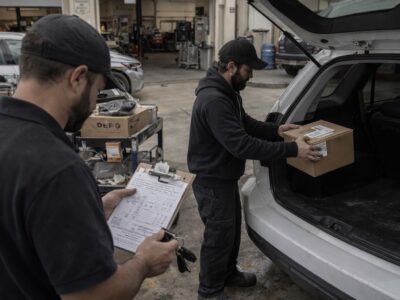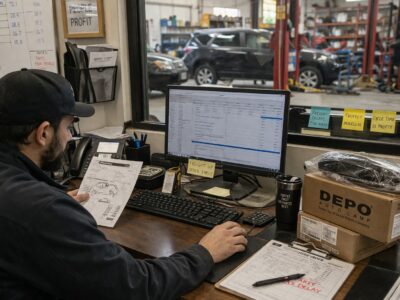
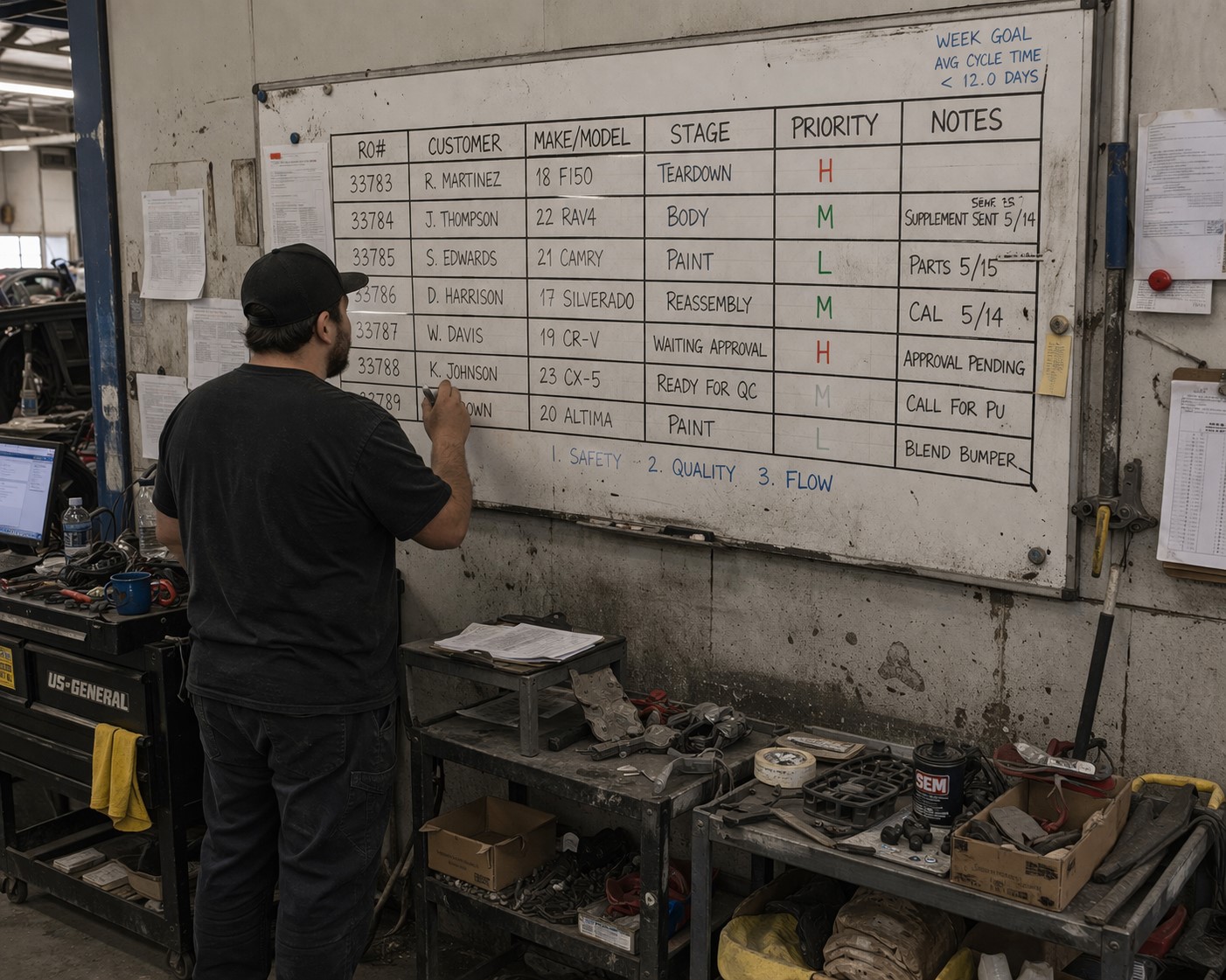
A vehicle gets torn down on Monday, the damage is mapped, photos are uploaded, and the supplement is sent. By Tuesday, the stall still looks occupied, but the job is no longer moving. That gap between teardown and insurer approval is where many shops lose control of flow, because the car counts as active while the repair is actually waiting on an outside decision.
This is why Work In Progress (WIP) can become a false comfort. The board fills up, technicians stay in motion, and the shop feels loaded. But loaded is not the same as productive. When several repair orders are sitting in post-teardown limbo, the shop starts pulling in more vehicles just to protect touch time, and that adds even more paused work to the system.
What tends to happen next is predictable. Parts ordering gets pushed back because approval is still pending. Delivery promises become soft because insurer timing, parts delays, and supplement negotiations are still unresolved. Technician attention gets split across half-open jobs, which increases handoffs, repositioning, and re-entry time.
The damage shows up in a few places:
- Cycle time grows without a visible floor problem
- Touch time drops even when the lot looks full
- Parts staging becomes harder because release timing is uncertain
- Customer updates get weaker because the next real step is unknown
The fix is not “tear down faster.” The real control point is deciding how many vehicles are allowed to reach full teardown before approval capacity, insurer response speed, and parts path are reasonably clear. In a small collision repair shop, that may mean slowing intake for a day, sequencing teardown in smaller batches, or holding a vehicle at blueprint-ready status until the shop can absorb another approval wait without clogging production.
This matters more now because modern repairs carry more approval friction than they used to. Advanced Driver Assistance Systems (ADAS) considerations, rising material costs, partial insurer reviews, and harder-to-predict parts availability all make the post-teardown wait more expensive. A stalled job is not neutral inventory. It consumes space, planning attention, and customer confidence.
The operating rule is simple: only tear down as many vehicles as the shop can move forward once approval lands. Approved work creates flow. Unapproved work creates buildup.