
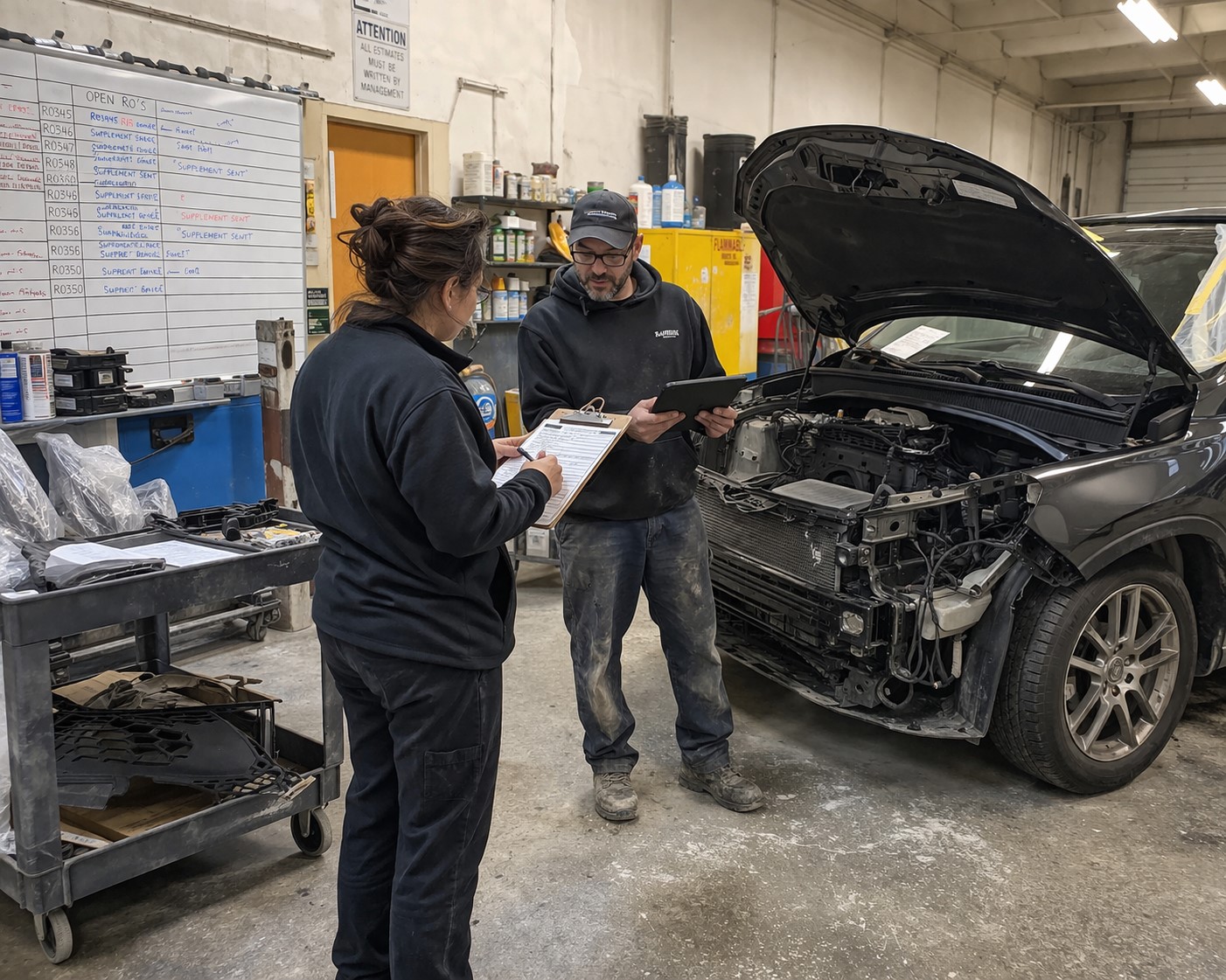
A customer’s rental coverage ends tomorrow, the vehicle is already torn down, the supplement is documented, and the insurer still has not responded. The estimator sends one more message, the production board keeps the repair order in limbo, and the front office starts bracing for the call nobody wants. That chain turns a documentation delay into a customer-service problem. The operational concept is simple: every supplement with rental pressure needs a same-day escalation point, not an open-ended follow-up.
In many collision repair shops, the repair itself is not what triggers the hardest conversation. It is the gap between blueprinting and decision-making. Once teardown is done, the repair order is no longer waiting on discovery. It is waiting on response timing, ownership, and whether someone inside the shop is treating the deadline like a live production issue. If nobody owns that clock, the customer experiences the delay as confusion, not as a process.
The fix is to flag rental-risk repair orders early and run them on a tighter decision lane. If a supplement is submitted and the rental deadline is close, the file should not sit in the same pile as every other approval. It needs a visible mark on the production board, a reset customer update, and a defined escalation time that happens before the end of the day. That keeps parts staging, scheduling, and promised delivery dates tied to reality instead of hope.
A simple rule works well in a small independent collision repair shop:
- If teardown is complete and rental coverage is under 48 hours, the repair order gets reviewed that day.
- If no approval response is received by the shop’s cutoff time, the next contact changes level, not just wording.
- If the timeline is still unstable, the customer receives a direct update before they have to call.
Most collision repair shops do not lose control because one supplement took too long. They lost control because nobody turned that delay into a managed decision before the rental deadline made it urgent.
The goal is not perfect insurer speed. The goal is to prevent a known pressure point from arriving at the front desk as a surprise.

What timer does your collision repair shop use for torn-down jobs that are documented but still waiting on approval?